
TerraLab Twin
A territorial digital twin is a 3D copy of a real place, built from the data that already describes it: orthophotos, elevation, LiDAR and vector layers. TerraLab Twin fuses those into one world you can navigate from planetary view down to a single building. It is not open to the public yet. Access goes through a waitlist.
What is TerraLab Twin?
TerraLab Twin is a real-time 3D engine built for real geospatial data. It fuses orthophotos, elevation models, LiDAR and vector layers into a single coherent 3D world: a digital twin of the territory as it actually is.
The same twin serves every scale. Navigate from a planetary view down to a single building with no seams and no loading, then measure, edit and simulate directly in the scene. Here is what that makes possible.
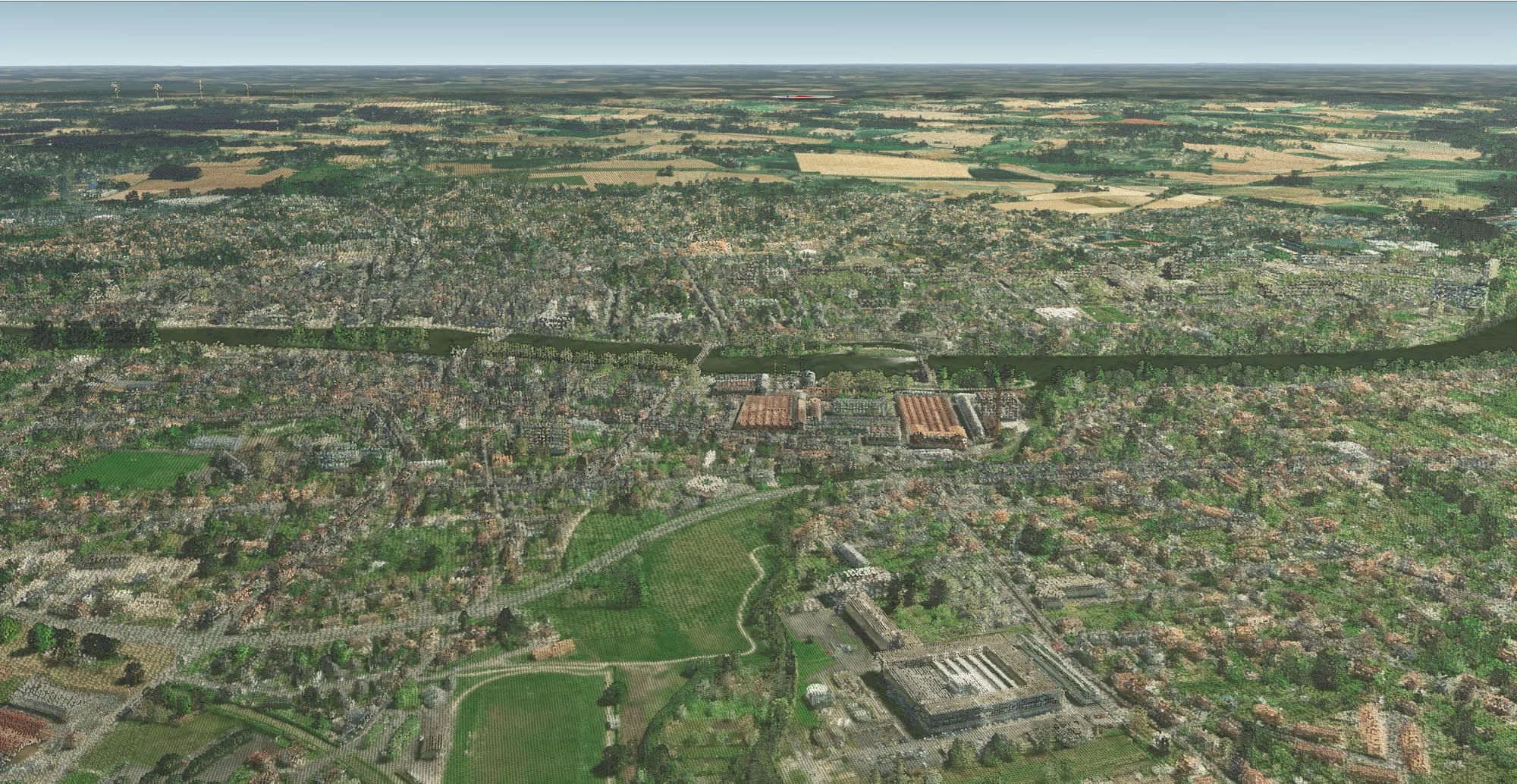
3D buildings, from LiDAR to LOD models
TerraLab Twin rebuilds whole cities in 3D from national open data (IGN, OSM and more): LiDAR, cadastre and aerial imagery become LOD1 to LOD2.2 buildings on the real terrain.
Each representation has a job: the LiDAR point cloud for measurement and analysis, Gaussian splatting for photorealistic rendering, LOD meshes for simulation and planning.
With their semantic attributes (footprint, height, roof type), buildings make the twin a real planning tool.
A digital twin of Quebec's forests
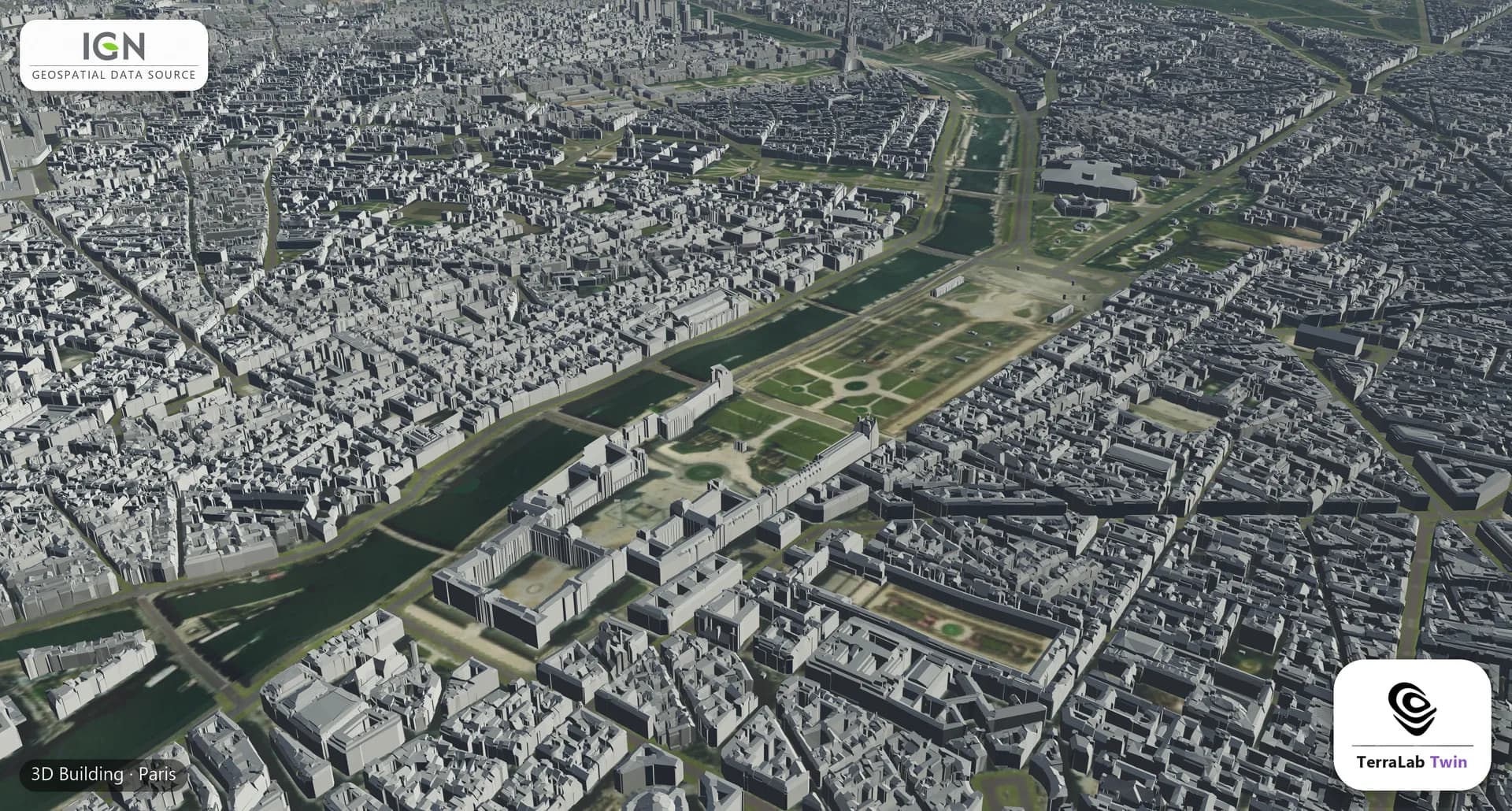
Quebec publishes 115,000 orthophoto tiles at 20-30 cm resolution, across a maze of projections and formats. TerraLab Twin absorbs them into one continuous 3D territory.
The pipeline reprojects every tile onto a single reference, fills gaps with Sentinel-2, harmonizes colors and drapes the result over 3D relief. No seams, from all of Quebec to a 50 m parcel.
A working foundation for forest management: navigate the territory as it is today and build your analysis on top.
Published case study
Read the full case study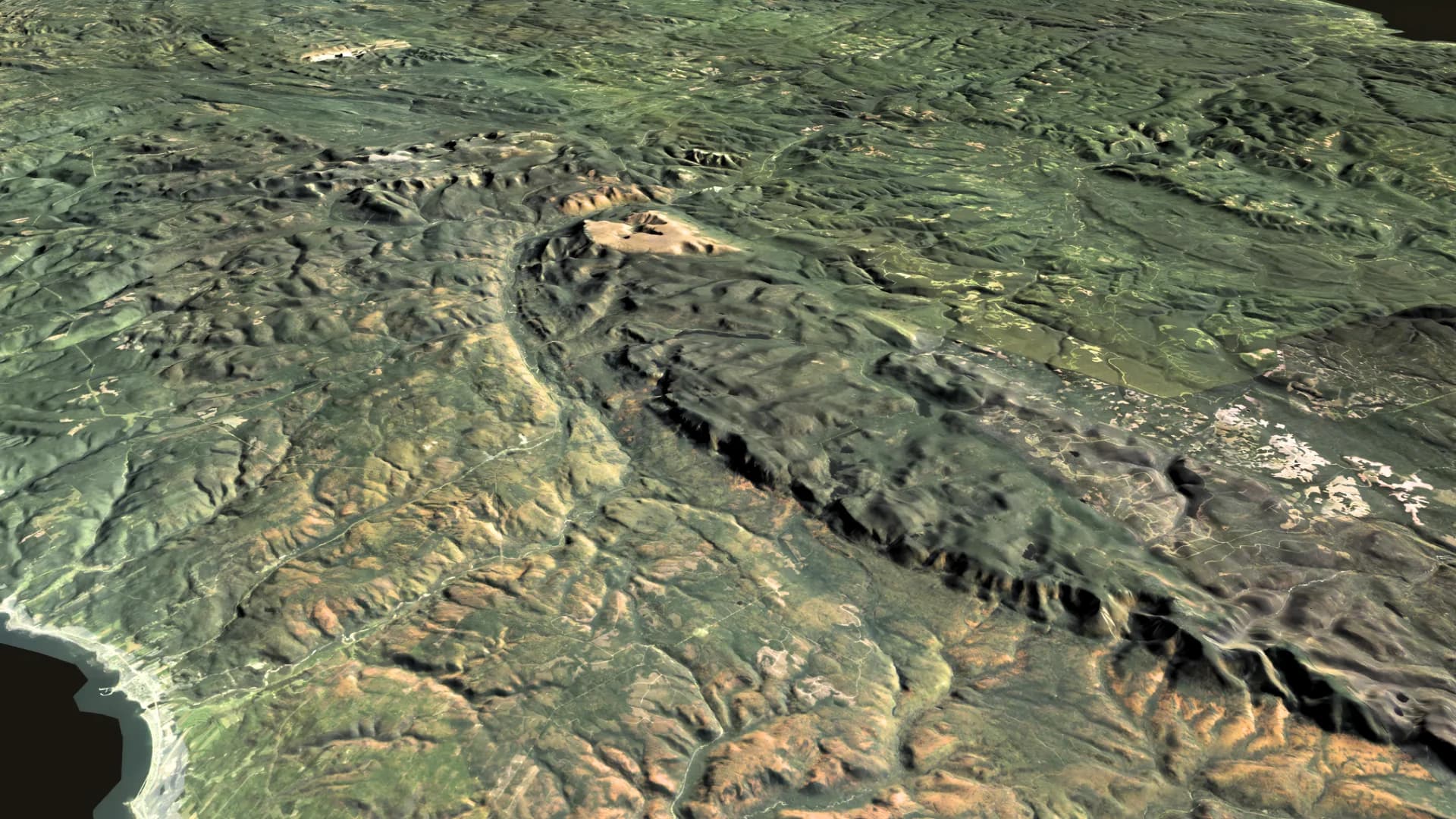
One engine, the whole planet
TerraLab Twin is not a per-project viewer, it is a virtual globe: a quadtree architecture streams only what your view needs, from a street corner to a continent.
Everything is computed on the real WGS84 ellipsoid, in 3D all the way through: no map-projection compromises, no seams at zone boundaries, no loading screens between scales.
Wherever geospatial data exists, the engine turns it into a navigable twin, rendered in real time on GPU on a standard workstation.
TerraLab Twin isn't open to the public yet
Interested in the project? Join the waitlist and we'll reach out personally as access opens.